
IRMAA Brackets Explained: Maximize Your Medicare Savings
May 8, 2026
IRMAA Brackets Explained: Why Some Retirees Pay More
Navigating Medicare costs can be daunting for retirees. As part of retirement planning, many are surprised by unexpected expenses. One such surprise is the Income-Related Monthly Adjustment Amount, or IRMAA.
IRMAA affects Medicare Part B and Part D premiums. It can lead to higher costs for some retirees. Understanding IRMAA is crucial for effective financial planning. This overview, “IRMAA Brackets Explained: Why Some Retirees Pay More for Medicare,” clarifies why some people pay more and how to prepare.
IRMAA is based on your income. Specifically, it uses your modified adjusted gross income (MAGI). The Social Security Administration determines your IRMAA using tax returns from two years prior. These “irmaa medicare” adjustments apply to premiums and can change annually.
Higher-income retirees often face increased Medicare premiums due to IRMAA. This can significantly impact their retirement budget. Knowing how IRMAA brackets work can help you plan better, especially when coordinating retirement planning decisions.
Appealing an IRMAA determination is possible. Life-changing events like retirement or marriage can affect your IRMAA. Proper tax planning can also help manage these costs.
This article will explain IRMAA brackets and their impact. We’ll explore strategies to manage or reduce IRMAA costs. Understanding these concepts can empower you to make informed decisions about your financial future.
What Is IRMAA and Why Does It Matter?
IRMAA stands for Income-Related Monthly Adjustment Amount. It is an additional charge on Medicare premiums. This adjustment applies to higher-income retirees.
Simply put, IRMAA affects Medicare Part B and Part D. It results in increased monthly costs for some individuals. The impact can be financially significant, though it does not change Medicare eligibility.
IRMAA ensures wealthier individuals contribute more to Medicare. It is not a tax, though it feels similar. It is an adjustment based on income levels.
Key aspects of IRMAA:
- Applies to higher-income individuals
- Based on modified adjusted gross income (MAGI)
- Adjustments are made annually
- Affects both Part B and Part D Medicare premiums
Understanding IRMAA is vital for effective retirement planning. Unexpected premium increases can disrupt financial plans. Being aware of IRMAA helps prepare for these costs. You may also see this discussed online as “irmaa medicare,” especially in resources covering Medicare eligibility and retirement planning.
Proper planning can help manage IRMAA’s impact. It allows retirees to budget wisely. Having a strategy in place can prevent costly surprises.
How IRMAA Affects Medicare Part B and Part D Premiums
IRMAA directly impacts the cost of Medicare premiums. It’s important to understand how this happens. Higher-income retirees often face unexpected increases in these costs.
For Medicare Part B, IRMAA adds to the standard premium. The standard premium as of 2023 is $164.90. But for those affected by IRMAA, it can be substantially more.
Medicare Part D premiums are also subject to IRMAA adjustments. This affects costs for prescription drug coverage. Retirees need to account for these potential increases. These surcharges don’t alter Medicare eligibility; they only affect what you pay.
The specific amount added by IRMAA varies. It depends on income thresholds known as IRMAA brackets. Here’s a quick breakdown:
- Part B: Additional charges increase premiums
- Part D: Higher costs on top of plan premiums
- Based on prior tax returns, specifically two years back
Being proactive can help you manage these adjustments. Awareness and planning are key to staying financially secure.
Understanding Modified Adjusted Gross Income (MAGI) and Its Role in IRMAA
Modified Adjusted Gross Income, or MAGI, is crucial in determining IRMAA. It’s not just ordinary income. MAGI includes various components to assess financial capacity.
MAGI starts with your Adjusted Gross Income (AGI). This is found on your tax return. But it’s adjusted further to fit IRMAA calculations.
Certain items are added back to your AGI. These include:
- Tax-exempt interest
- Foreign income exclusions
- Deductions for IRA contributions
By understanding MAGI, retirees can plan better. Knowing what impacts MAGI helps to anticipate IRMAA charges.
A clear grasp of MAGI is pivotal for retirement planning. It ensures retirees can manage their Medicare costs effectively. Reviewing these elements yearly aids in making informed financial decisions. Adjusting income strategies can potentially lower IRMAA-related expenses.
The IRMAA Brackets: Income Thresholds and Premium Surcharges
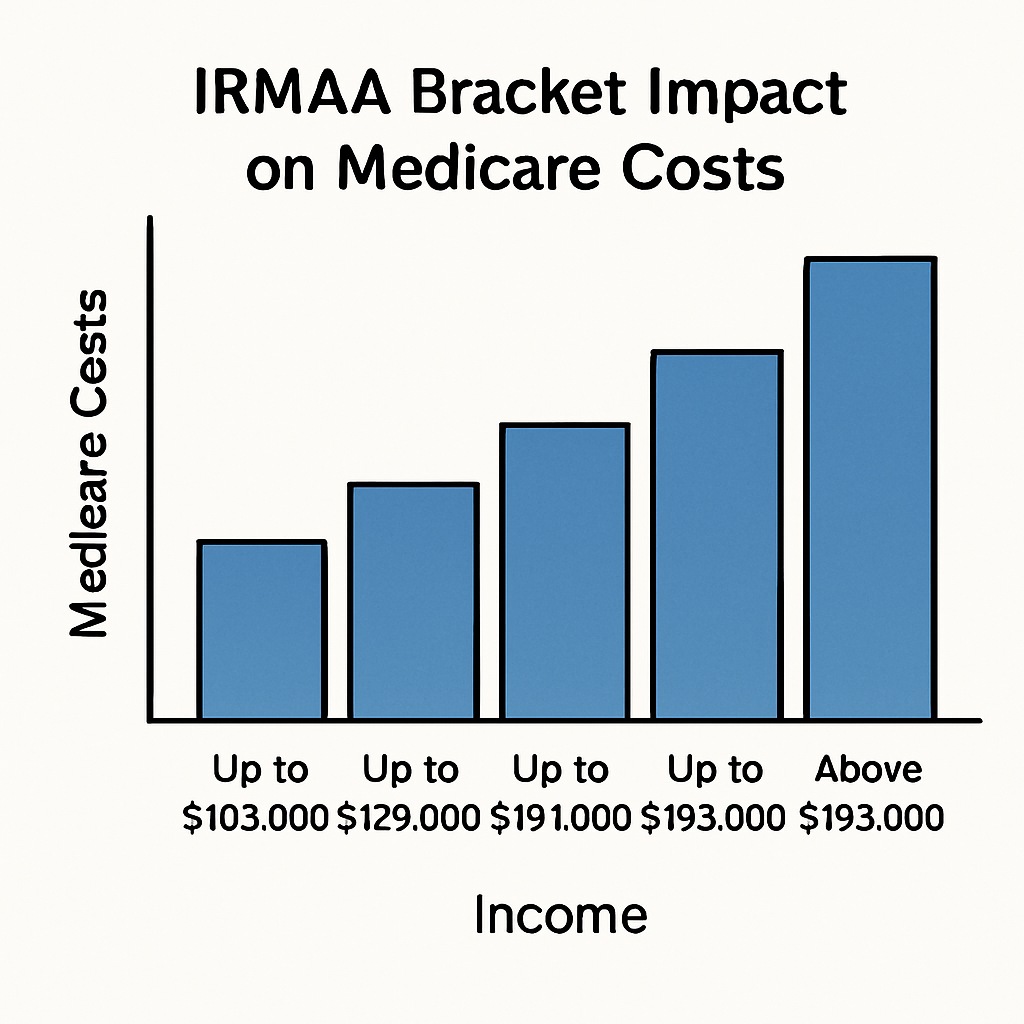
IRMAA brackets dictate how much more retirees might pay for Medicare. Understanding these brackets can prevent surprises. The brackets consider your MAGI to assess adjustments. In practice, understanding how IRMAA brackets are set can help you anticipate changes to premiums.
The first bracket starts at $97,000 for singles and $194,000 for couples. This increases your premiums marginally compared to the standard rate. As income rises, so does the adjustment.
Key IRMAA Brackets for Individuals:
- MAGI $97,000 to $123,000: Higher premiums begin.
- MAGI $123,001 to $153,000: Next premium increase.
- MAGI $153,001 to $183,000: Further hike in costs.
Key IRMAA Brackets for Couples:
- MAGI $194,000 to $246,000: Initial premium adjustment.
- MAGI $246,001 to $306,000: Additional increase.
- MAGI $306,001 to $366,000: Further premium surcharges.
Top earners surpassing $500,000 (singles) or $750,000 (couples) face the highest surcharges. This affects both Medicare Part B and D. These rates update yearly, reacting to inflation and policy changes.
Understanding IRMAA brackets helps retirees plan finances. It allows for proactive strategies to minimize costs. By monitoring these thresholds, retirees can better control retirement expenses.
How the Social Security Administration Determines Your IRMAA
The Social Security Administration (SSA) determines your IRMAA based on your income. They use information from your tax return to assess your costs. Typically, they look at your income data from two years prior.
Your Modified Adjusted Gross Income (MAGI) is vital for IRMAA. The SSA uses this figure to see where you fall within the IRMAA brackets. MAGI includes adjusted gross income and tax-exempt interest income.
Key Points in SSA Determination:
- Review of your federal tax return.
- Focus on income from two years back.
- Calculation of MAGI to determine income-related adjustments.
By understanding how SSA evaluates your income, you can better prepare for potential IRMAA costs. Awareness of these factors enables more strategic financial planning.
Why Some Retirees Pay More: Common Triggers for Higher IRMAA
Higher IRMAA costs can surprise many retirees. Several factors contribute to increased premiums. Understanding these can help manage unexpected expenses.
Major life events often trigger higher IRMAA. For instance, selling property or receiving large bonuses can inflate your income. These changes might temporarily push you into a higher income bracket.
It’s crucial to consider capital gains. Selling investments could inadvertently increase your Modified Adjusted Gross Income (MAGI). This may lead to higher Medicare premiums.
Frequent Triggers for Increased IRMAA Costs:
- Significant stock sales or property transactions.
- Large one-time income events like bonuses or inheritance.
- Changes in income level due to life events such as marriage or retirement.
Staying mindful of these triggers is essential. Proactive financial planning can help in avoiding sudden cost hikes due to IRMAA adjustments.
How to Appeal an IRMAA Determination
If you face an unexpected IRMAA charge, don’t worry. You have the right to appeal the determination. An appeal can be successful if there’s a valid reason behind a sudden income change.
A life-changing event is a common basis for an IRMAA appeal. These events include retirement, marriage, divorce, or the death of a spouse. Proper documentation supporting these events is crucial for a successful appeal.
Steps to Appeal an IRMAA Determination:
- Gather documentation of your life-changing event.
- Complete Social Security’s “Request for Reconsideration” form.
- Submit the form and documentation to the Social Security Administration.
Ensure you follow these steps carefully. Prompt action can help resolve any discrepancies in your Medicare premium charges due to IRMAA.
Strategies to Manage or Reduce IRMAA Costs
Managing your IRMAA costs requires strategic planning. Simple steps can help reduce the impact of these Medicare adjustments. Begin by understanding how your income affects IRMAA calculations.
Reducing your Modified Adjusted Gross Income (MAGI) can lower or eliminate IRMAA charges. It’s important to explore various methods to achieve a lower MAGI. Consult with a tax professional to effectively identify opportunities for savings.
Consider the Following Techniques:
- Roth Conversions: Convert traditional IRA funds to a Roth IRA gradually to manage taxable income.
- Charitable Contributions: Deduct charitable donations, which can reduce taxable income.
Retirees should also consider the timing of income recognition. Spreading out or delaying income in certain situations can be advantageous. For instance, deferring capital gains or minimizing withdrawals from retirement accounts can help.
Additional Strategies:
- Investment Strategies: Focus on tax-efficient investments such as municipal bonds.
- Gift Contributions: Transfer wealth via gifts to family members to potentially lower MAGI.
Keeping an eye on income sources is essential. Regular reviews of your financial situation can save significant amounts on Medicare premiums.
As part of your plan, consult with financial advisors. Their expertise can guide you through complex tax strategies and maintain your financial health in retirement. In many cases, advisors will reference terms like “irmaa medicare” when coordinating plan choices with income.
IRMAA and Retirement Planning: What Small Business Owners and Retirees Need to Know
IRMAA significantly affects retirement planning, and understanding it is essential for both small business owners and retirees. The impact of higher Medicare premiums can alter your retirement budget.
Small business owners should consider the timing of major transactions. Profits from a sale or large withdrawals can increase your MAGI, pushing you into a higher IRMAA bracket. Awareness of these aspects can save money and prevent financial stress.
Retirees need to be proactive in managing their income streams. This involves strategic planning and seeking professional advice.
Key Considerations:
- Evaluate the timing of income recognition.
- Explore tax-efficient investment vehicles.
- Consider how selling assets might affect IRMAA.
- Regularly consult with a financial advisor to understand IRMAA implications and to optimize retirement income strategies.
Being informed about IRMAA keeps retirees and business owners financially prepared.
Frequently Asked Questions About IRMAA and Medicare Premiums
Understanding IRMAA can be complex. Here, we address some common questions to clarify its implications.
What is IRMAA?
IRMAA stands for Income-Related Monthly Adjustment Amount. It’s an extra charge added to Medicare Part B and D premiums for higher-income retirees.
Why does IRMAA exist?
It ensures that higher-income individuals contribute more to the Medicare system.
How is IRMAA calculated?
The Social Security Administration calculates IRMAA based on Modified Adjusted Gross Income (MAGI) from two years prior.
What if I had a life-changing event?
You might appeal your IRMAA if you experience a major life event, like retirement or the death of a spouse.
Can IRMAA change annually?
Yes, it can change annually with updates to income thresholds and brackets.
Common Questions About IRMAA:
- What triggers a higher IRMAA bracket?
- How can I reduce IRMAA costs?
- What documentation is needed for an appeal?
Understanding these elements helps manage IRMAA effectively, ensuring informed Medicare decisions.
Staying Informed: Annual Updates and Policy Changes
Retirees should stay updated on IRMAA changes. Each year, the Social Security Administration updates IRMAA brackets.
Policy shifts can impact your retirement costs significantly. Regularly checking for updates ensures you won’t face unexpected surcharges.
Key Ways to Stay Informed:
- Monitor announcements from Medicare and the Social Security Administration.
- Attend Medicare seminars or webinars.
- Consult with a financial advisor annually.
Remaining vigilant helps manage potential cost changes, keeping your financial plans on track. Knowledge is your ally in navigating Medicare premiums effectively.
Key Takeaways and Next Steps
Navigating Medicare premiums requires awareness and preparation. Understanding IRMAA brackets equips you to anticipate potential costs.
To mitigate unexpected expenses, proactive planning is essential. Take steps now to ensure financial security in retirement.
Actions to Consider:
- Review your MAGI regularly.
- Consult with a financial advisor to discuss IRMAA implications.
- Explore strategies to adjust income levels as necessary.
Stay informed about annual IRMAA changes to avoid surprises. An informed retiree is better positioned to maintain financial stability and make confident Medicare decisions. Prioritize understanding these elements to keep your retirement plans secure.
Q&A
Question: What is IRMAA, and which parts of Medicare does it affect?
Short answer: IRMAA (Income-Related Monthly Adjustment Amount) is an extra charge added to Medicare premiums for higher-income individuals. It applies to both Medicare Part B (medical insurance) and Part D (prescription drug coverage). IRMAA raises what you pay each month, but does not change your Medicare eligibility. It isn’t a tax, though it functions like an income-based surcharge, and it can meaningfully impact a retiree’s budget.
Question: How does the Social Security Administration determine my IRMAA, and which income year is used?
Short answer: The SSA bases your IRMAA on your Modified Adjusted Gross Income (MAGI) reported on your federal tax return from two years prior. They place you into IRMAA brackets, income thresholds that determine how much is added to your Part B and Part D premiums. For context, the first bracket begins at $97,000 for single filers and $194,000 for couples, with top surcharges above $500,000 (single) or $750,000 (couple). Brackets and amounts are updated annually.
Question: What kinds of events can unexpectedly push me into a higher IRMAA bracket?
Short answer: One-time or unusual spikes in income are common triggers. Examples include selling appreciated investments or property (capital gains), receiving large bonuses or inheritances, and income changes tied to life events like marriage or retirement. Even temporary increases in income can raise your MAGI and move you into a higher IRMAA bracket for the year it’s measured.
Question: What strategies can help manage or reduce IRMAA costs?
Short answer: Focus on managing MAGI with thoughtful timing and tax planning. Potential steps include:
- Spreading Roth IRA conversions over multiple years instead of doing them all at once
- Making charitable contributions that reduce taxable income
- Timing or deferring capital gains and withdrawals when possible
- Reviewing income sources annually and coordinating moves with a tax professional
Proactive planning helps you stay under key thresholds and avoid avoidable surcharges.
Question: How do I appeal an IRMAA determination after a life-changing event?
Short answer: You can appeal if you’ve had a qualifying life-changing event, such as retirement, marriage, divorce, or the death of a spouse, that materially reduced your income. To appeal:
- Gather documentation of the event
- Complete Social Security’s Request for Reconsideration form
Submit the form and supporting documents to the SSA
Timely, well-documented appeals can result in lower IRMAA charges that better reflect your current income.
Concerned your Medicare premiums could increase because of IRMAA?
Schedule a free, no-obligation consultation, and we’ll help you understand what triggers IRMAA, review income “spikes” that can raise premiums, and identify practical strategies to plan.