Secure Growth with an Index Annuity
February 9, 2026
Understanding the Benefits of an Index Annuity
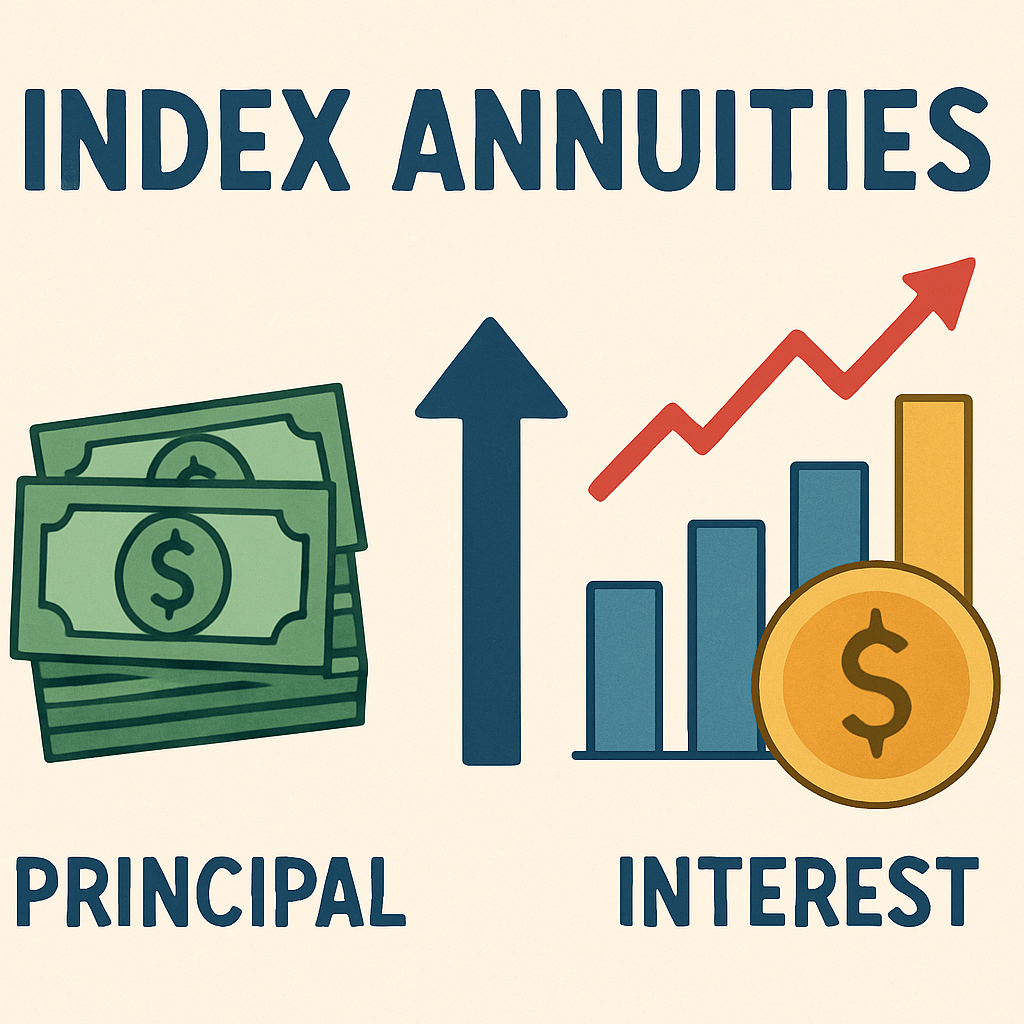
Watching your retirement savings ride the stock market rollercoaster can be stressful. What if there was a way to capture growth from the market’s good years without losing your hard-earned money during the bad ones?
For many, the answer lies in a product called an index annuity. Instead of being in the market, its performance is linked to a market index, such as the S&P 500. This provides a solid floor so your money is protected, but also a ceiling that allows for growth. However, this safety comes with a trade-off: in exchange for the peace of mind that your principal is secure, you give up the chance for unlimited gains, creating a balance between opportunity and safety.
What Is an Annuity? Think of It as a Personal Pension Plan
At its heart, an annuity is a formal contract you make with an insurance company. Think of it like creating your own personal pension plan. You give the company a sum of money—called a premium—and in return, they promise to provide you with a steady stream of retirement income in the future.
An annuity’s primary job is to turn a portion of your savings into a reliable paycheck for your later years. While some annuities grow at a simple, fixed interest rate, an index annuity takes a different approach to how your money can grow.
How Does an Index Annuity Differ from a Fixed Annuity?
Many investors ask, how does an index annuity differ from a fixed annuity? A traditional fixed annuity credits a declared interest rate for a set period. An index annuity, by contrast, ties potential interest to an external market index while using a 0% floor and contract features such as caps and participation rates. Both aim for principal protection when held as intended, but the index-based approach introduces more variability and complexity in exchange for growth potential.
How Your Money Is Linked to the Market, Not Locked In It
Instead of earning a fixed rate, an index annuity links your potential interest to a market index, like the S&P 500 (a collection of 500 large U.S. companies). Think of it like cheering for a sports team without playing the game. If the index has a positive year, you get credited with interest based on that performance. Crucially, your money is never directly exposed to the stock market’s volatility.
This is where the product’s most important safety feature comes in: the 0% floor. The insurance company guarantees that even if the market index has a negative year, the lowest interest rate you can be credited is zero. This provides an annuity with principal protection against market downturns. If the index goes down 15%, your account value doesn’t change—you simply earn 0% for that year. You don’t gain, but you don’t lose.
What’s the Catch? A Clear Look at Caps and Participation Rates
That protection against loss requires a trade-off. The insurance company limits your potential gains in two primary ways, which are crucial to understand before considering this type of product.
The most common limit is a Cap Rate. Think of it as a speed limit for your earnings. If the market index gains 10% but your annuity has a 7% cap, your account is credited with 7% for that period. You give up the gains above the cap in exchange for the safety of the 0% floor.
Another way your gains might be limited is through a Participation Rate. This determines what percentage of the index’s growth you get to participate in. If the index gains 10% and your contract has an 80% participation rate, your credited interest would be 8% (80% of that 10% gain).
These limits are the fundamental structure that allows the insurance company to absorb market losses on your behalf. You get a portion of the market’s good years to avoid all of the bad ones. When comparing products across carriers, look beyond headline numbers and review the crediting method, cap, participation rate, and any spreads or fees that affect your credited interest.
Can You Lose Money? The Truth About Principal Protection
When it comes to market risk, your principal is contractually protected by the 0% floor. However, this guarantee is backed by the issuing insurance company, not by the stock market or the government. The safety of your investment, therefore, depends entirely on that company’s long-term financial strength. Choosing a stable, highly-rated insurer is a critical part of the process.
It’s also important to know that “principal protection” refers specifically to market performance. You can still lose money for other reasons, most commonly by withdrawing funds too early. Annuities are long-term products, and cashing out before your contract’s specified “surrender period” is over will likely result in significant penalties.
The ‘Lock-In’ Period: Why You Shouldn’t Touch Your Annuity Early
The penalty for cashing out early is called a surrender charge. This charge applies during a set timeframe detailed in your contract, known as the surrender period, which often lasts anywhere from five to ten years or longer.
During this time, if you withdraw more money than the contract allows (many permit a 10% annual withdrawal), the insurance company will keep a percentage of the money you take out.
This penalty typically declines each year—for instance, it might be 9% in year one, 8% in year two, and so on, until it finally disappears.
Because of these potential charges, an index annuity must be viewed as a long-term commitment. The money you contribute should be funds you are confident you will not need for emergencies or other short-term goals.
Who Should Consider an Index Annuity (And Who Shouldn’t)
After weighing the pros and cons, the decision boils down to your personal comfort with risk. Some people are fine with the stock market’s rollercoaster for a chance at higher returns. Others prioritize protecting their savings above all else. An index annuity is built for that second group.
This contrast helps clarify who indexed annuities are for:
- Best for: Savers nearing retirement (5-10 years out) who want to shield their nest egg from market loss.
- Less suitable for: Younger investors with decades to go, who can typically afford more risk for a shot at greater long-term growth.
This product is designed for capital preservation with modest growth potential. It’s not about getting rich; it’s about staying secure.
Your Next Step: Key Questions to Ask About Index Annuities
An index annuity offers a way to balance growth potential with principal protection, exchanging unlimited gains for a guarantee against market loss. If you believe this tool fits your financial plan, here are the essential questions to ask a financial professional:
- What is the exact cap rate, and can it change?
- How long is the surrender period, and what is the penalty each year?
- What are all the annual fees and administrative charges?
- What are the current index annuity rates for each crediting strategy, and how are they determined?
As you compare options, review reputable carriers and product designs—such as the Nationwide Fixed Index Annuity—alongside competitors. Focus on each insurer’s financial strength, the contract’s terms, and how well the features align with your goals.
Wondering if an index annuity fits your retirement plan?
Schedule a free, no-obligation consultation, and we’ll help you compare options, understand how cap rates and participation rates may affect your upside, and review key details like surrender periods, fees, and insurer strength—so you can decide with confidence.