Find Your Old 401(k) for Free: Secure Retirement Savings
April 22, 2026
How to Find an Old 401(k) for Free and Avoid Losing Track
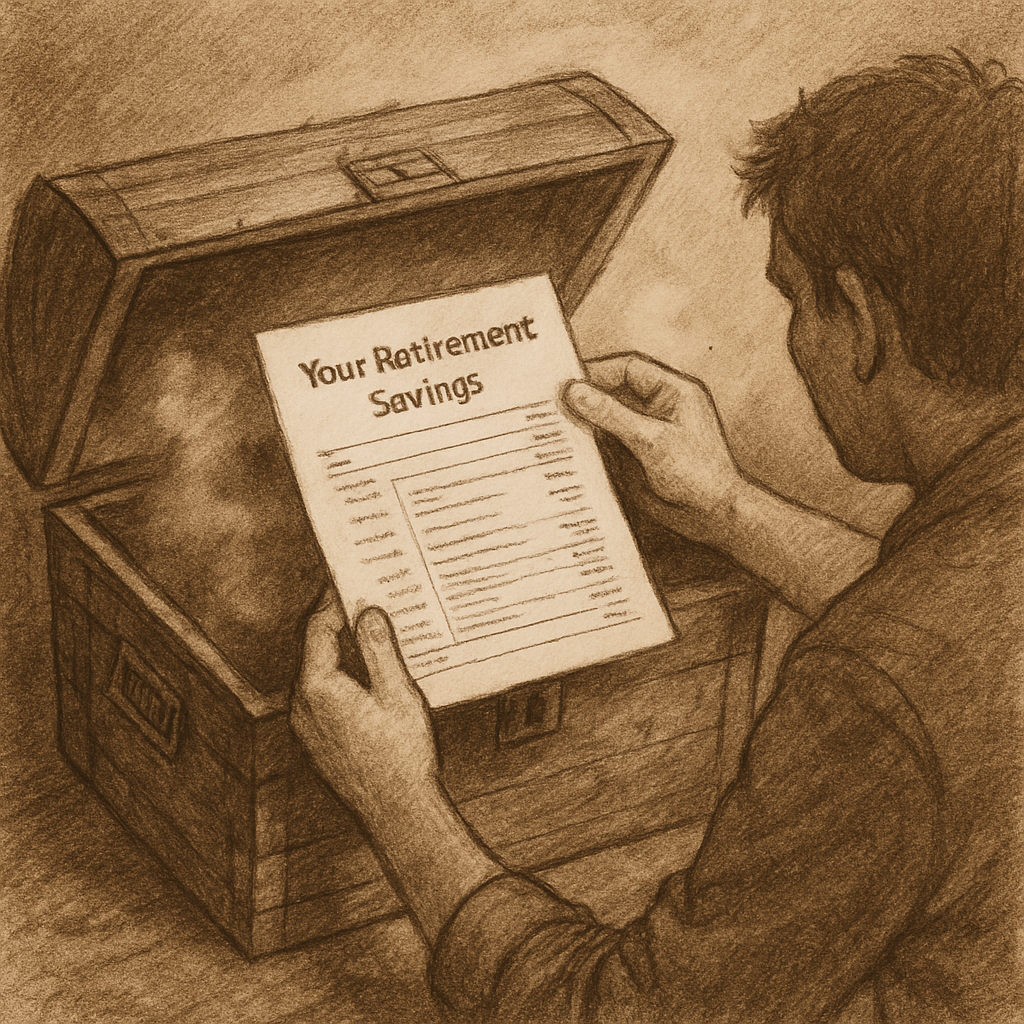
Imagine stumbling upon an envelope stuffed with cash that you forgot you even owned. For millions of workers, that scenario is reality, with an estimated $1.65 trillion currently sitting in left-behind 401(k) accounts across the country. Changing jobs often means leaving a paper trail of savings behind, and life gets too busy to keep track of every account login from five years ago.
Think of a forgotten retirement plan like a physical wallet you accidentally left in a desk drawer at a previous apartment. The money inside is still legally yours, but you no longer have the keys to the building to retrieve it. Unfortunately, unmonitored accounts don’t just sit safely; administrative fees and inflation quietly eat away at your balance over time, turning a significant asset into a shrinking pile of cash.
Recovering these funds doesn’t require expensive investigators or complex legal knowledge. A simple strategy can locate old 401(k)s free of charge and consolidate your retirement planning into one manageable place, putting that money back to work for your future. This guide explains how to find an old 401(k) for free and avoid losing track of it, including where to run a free 401 (k) search so you can find old 401 (k) for free without paying third parties.
How to Trace Your Former Employer Through Name Changes and Mergers
Searching for a business that seemingly vanished into thin air is frustrating. Perhaps you worked for a small local startup ten years ago, but today that brand no longer exists because it was bought out or rebranded. This “Company Name Change” trap is the most common reason old retirement accounts get separated from their owners. If the company you worked for was acquired, your 401(k) didn’t disappear; it likely moved to the new parent company, known in financial terms as the “successor entity.”
Your best clue for solving this mystery often hides in your old tax files. Dig up a past W-2 form from that job and look at the Employer Identification Number (EIN) and the legal company name listed in Box “c”. The government views this company as your “Plan Sponsor”—the legal party responsible for setting up your benefits. Even if the store sign out front has changed, the Plan Sponsor’s official records create a paper trail that usually leads directly to the current administrators holding your funds.
Searching for the legal name on a standard search engine might not yield results if the merger happened years ago. Instead, perform a former employer name change lookup using the Business Search feature on the Secretary of State website for the state where you worked. These government databases track corporate histories, allowing you to see if “Company A” officially merged into “Company B.” Once you identify the surviving company, you can contact their HR or Benefits department to ask how to trace old employer 401(k) administrator details for the original plan.
If you cannot find the successor entity or if the company went bankrupt, the government and non-profit organizations maintain massive search engines specifically designed to reconnect people with their lost savings.
The 3 Best Free Databases to Locate Your Missing Retirement Funds
You don’t need to be a private investigator to find these funds. While your old company might have moved or changed names, they are legally required to file specific paperwork regarding benefit plans. Several free, non-profit databases aggregate this government data, allowing you to search for unclaimed 401(k) money using just your social security number or the employer’s name. Think of these as free search tools you can complete in minutes.
If your account balance was under $5,000, start with the National Registry of Unclaimed Retirement Benefits. Employers often offload these smaller accounts to third-party custodians to reduce administrative costs. This national database acts like a “lost and found” specifically for retirement cash, connecting you directly with the custodian holding your funds.
For larger accounts or active plans, you may need to dig into tax records using an IRS Form 5500 search via sites like FreeERISA. Every Plan Sponsor must file this form annually. By looking up your former employer’s name, you can view their 5500 filing, which lists the current “Plan Administrator”—the specific financial institution, like Fidelity or Vanguard, that actually holds the money.
Follow this prioritized search order to cover all bases:
- National Registry of Unclaimed Retirement Benefits: Best for balances under $5,000.
- FreeERISA: Use this to find the current Plan Administrator (the bank) if you know the Plan Sponsor (the employer).
- MissingMoney.com: The official portal for state unclaimed property; check here if the account has been dormant for three or more years.
Used together, these free tools make it easier to find old 401 (k) accounts tied to past jobs.

Sometimes, even these databases come up empty because the original company no longer exists in any form.
What Happens if Your Old Company Closed? Using the PBGC Safety Net
You might fear the employer used your savings to pay off business debts, but federal law strictly prevents this. Your assets sit in a separate trust—effectively a locked vault that company creditors cannot touch. Even if the business dissolves completely, that money remains yours and must be distributed to you or moved to a holding account.
When a business shuts down, they end the retirement program through a process called plan termination. If the employer cannot find you during this transition, they transfer your details to the federal government. The Pension Benefit Guaranty Corporation database acts as the safety net for these “Missing Participants.” While historically known for traditional pensions, this agency now actively assists in finding abandoned defined contribution plans, keeping your funds safe until you come forward to claim them.
Locating the money is only the first victory; moving it without triggering a surprise tax bill is the second. Once you find your funds, avoid having a check mailed directly to you, which the IRS treats as a taxable withdrawal. You must instead perform a specific financial handshake to keep your savings growing.
Executing the ‘Bank-to-Bank Handshake’ to Claim Your Money Tax-Free
Once you have located your old account, bringing that money home requires caution. The safest method is the “Bank-to-Bank Handshake,” officially known as a Direct Rollover. This process ensures your retirement funds move straight from your old employer’s plan to your new Individual Retirement Account (IRA) or your current job’s 401(k) without ever passing through your personal checking account. By keeping your hands off the cash, you protect the tax-sheltered status of your savings and ensure every dollar continues growing for your future.
Taking a check made out to you personally triggers an expensive trap called the “Indirect Rollover.” When you request a cash payout, the IRS mandates your old employer withhold 20% of the balance for taxes immediately. To put that full balance back into a retirement account later, you would have to replace that missing 20% from your own pocket within 60 days. Failing to rollover old 401(k) into IRA funds correctly often results in permanent tax penalties that eat away nearly a third of your hard-earned savings.
Executing the transfer is essentially a three-step phone call or online form submission. Before you contact your old plan administrator, gather these three critical pieces of information to ensure the check goes to the right place:
- New Account Number: The ID for your destination IRA or current 401(k).
- Mailing Address: Exactly where the check should be sent (often a specific P.O. Box for rollovers).
- “Make Payable To” Instructions: Usually written as “New Firm FBO [Your Name]” (FBO stands for For Benefit Of).
A rollover usually simplifies your financial life by reducing fees and logins. Rather than letting money stagnate, moving it to a personal IRA creates a “Safety Bucket” under your total control to prevent losing track of retirement savings. With your funds now secured in one place, the final step is ensuring you never have to hunt for lost assets again by building a fail-safe tracking system.
The ‘Financial Master List’ Strategy to Never Lose a Dollar Again
Managing five different logins for five past jobs is a recipe for forgotten passwords and unnecessary fees. By choosing to consolidate old retirement plans into a single IRA or your current employer’s plan, you drastically reduce the mental load of financial planning. When your savings are centralized, you stop paying duplicate administrative fees and gain a clear view of your total nest egg, making it much harder for assets to go missing.
To ensure you always know how to track multiple retirement accounts—even if you change jobs again—create a “Financial Master List.” This simple document acts as a treasure map for you and your family, ensuring that if something happens to you, your hard-earned money doesn’t become unclaimed property. Store this list securely, such as in a password manager or a fireproof box, and include these four essentials:
- Institution Name: Who holds the money (e.g., Fidelity, Vanguard).
- Account Number & Login: The specific ID and username to access balances.
- Beneficiary Name: Who receives the money if you pass away.
- Customer Service Phone: The direct number to call for assistance.
Life changes faster than financial paperwork, so reviewing this list annually is critical. An old ex-spouse might still be listed as your beneficiary on an account from ten years ago, meaning they would legally inherit your savings regardless of your current will. To prevent losing track of retirement savings in the future, set a personal rule: initiate a rollover within 30 days of leaving any job. With your records organized and your strategy set, you are ready to take immediate steps to secure your financial future.
Your 48-Hour Action Plan to Reclaim Your Financial Future
You have moved past the uncertainty of lost paperwork and now possess a clear roadmap to reclaim your hard-earned savings. By utilizing government resources and national registries, you can find old 401(k) plans free of charge and avoid the fees associated with third-party search firms. Remember that finding the money is only the beginning; securing it requires the “Bank-to-Bank Handshake” of a Direct Rollover. This critical step ensures your savings move safely into your control without triggering unnecessary taxes or penalties.
Give yourself a simple forty-eight-hour timeline to close this chapter. Dedicate ten minutes this Saturday to locating missing retirement funds through the databases discussed. If you find a match, make that single, most important phone call to the plan administrator on Monday morning. Recovering an old balance of $5,000 today could grow significantly by the time you retire, making this brief administrative task one of the most profitable hours of your life.
Reclaiming these accounts is about more than just finding lost cash; it is an act of taking full ownership of your retirement planning. You no longer need expensive services to manage what is rightfully yours. By consolidating your scattered accounts, you simplify your financial life and ensure that every hour you worked in the past continues to serve your future. Start your search now and turn those forgotten funds into a foundation for financial peace of mind.
Need help tracking down an old 401(k) and deciding what to do with it?
Schedule a free, no-obligation consultation, and we’ll help you locate old plans, get organized, and evaluate your best next step, so nothing gets left behind.