
PPO Insurance Guide: Pre-Medicare Essentials
May 22, 2026
PPO Insurance Explained for Pre-Medicare Coverage Shoppers
This guide delivers PPO Insurance Explained for Pre-Medicare Coverage Shoppers, offering clear options and health insurance insights as you compare plans.
Imagine finding a specialist you love, only to have your private health insurance say “no” because you didn’t ask permission first. In practice, many plans demand a formal note from your primary doctor, called a referral, just to book that appointment.
A preferred provider organization (PPO) is designed to prevent that exact frustration. As a choice-first model, this setup lets you skip the gatekeeper and call a dermatologist or physical therapist directly.
Navigating PPO insurance before Medicare ultimately comes down to understanding your flexibility. You unlock the best rates by using a designated list of doctors, known as your network, but you still retain coverage if you visit someone outside of it. For context, you’ll also find medicare coverage explained where relevant, helping you prepare for the transition to Medicare.
See the Specialist You Want Without a ‘Hall Pass’ from Your Doctor
If you tweak your knee during a weekend hike under many standard plans, you must visit a general doctor to get a “hall pass” before seeing an orthopedic expert. A PPO eliminates this frustrating extra step, giving you the freedom to see specialists without referrals.
Often called a Primary Care Physician (PCP), this general doctor normally manages your overall health. While other types of private health insurance force you to use a PCP as a mandatory gatekeeper, a PPO simply treats them as an optional, helpful home base for your routine wellness.
Bypassing that initial approval appointment saves you an extra copay and gets you treated much faster. When a nagging skin issue flares up, you can book a dermatologist directly, making evaluating physician networks the only step needed to ensure your chosen doctor is covered.
Ultimately, this direct access puts you in complete control of your healthcare timeline. But how much will that faster care actually cost when you arrive at the clinic?
Cracking the Code of PPO Costs: Premiums, Deductibles, and Your Wallet
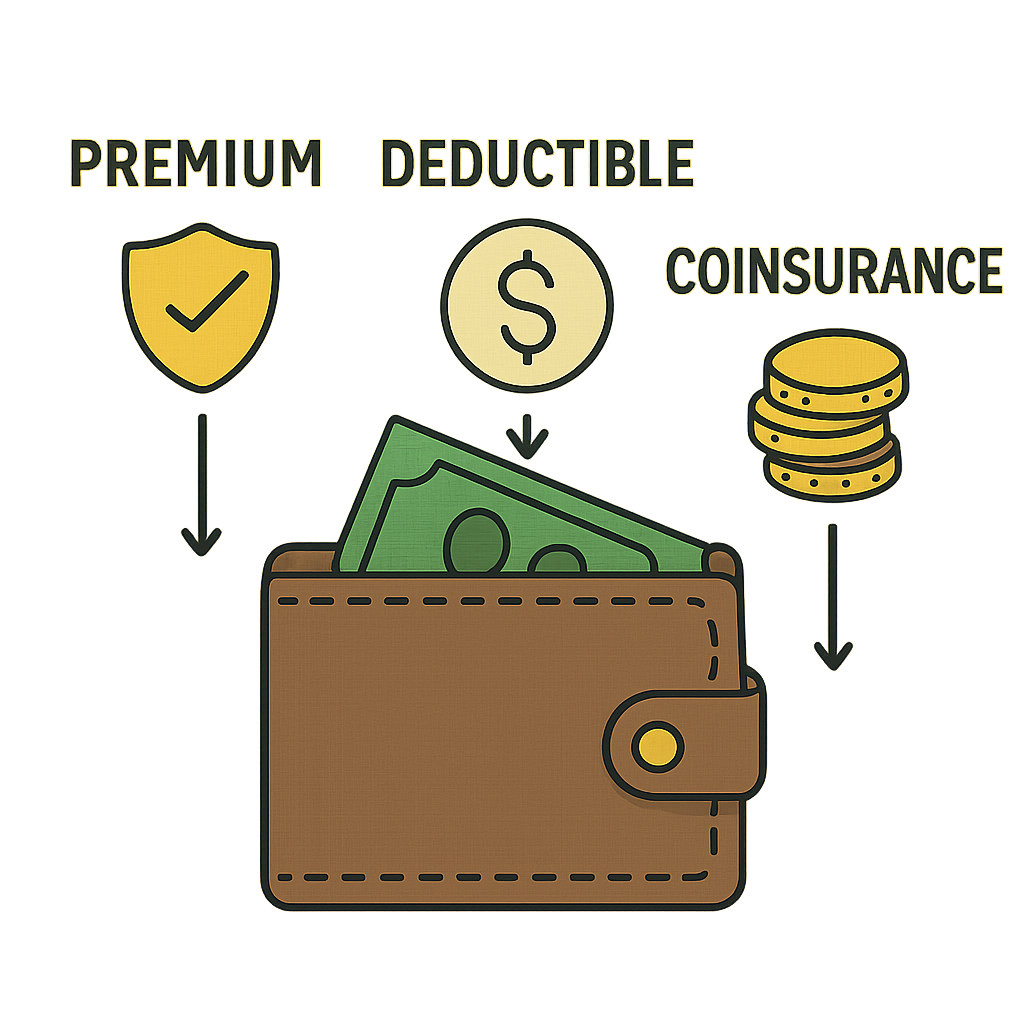
Evaluating individual PPO health insurance costs, often called PPO insurance costs, resembles buying a gym membership. Your Premium is the monthly subscription fee keeping your coverage active. While PPOs typically charge higher premiums for that direct specialist access, people who use their insurance frequently often save money in the long run.
Before your plan helps with major expenses, you must pay an “entry fee” called your Deductible. Once cleared, you enter the “bill splitting” phase: you pay a small percentage of the bill, and your insurance company covers the rest.
Here is the straightforward math on a $1,000 clinic bill, assuming you have already met your deductible for the year:
- Insurance covers 80%: $800
- Your 20% Coinsurance: $200
For major medical events, your Out-of-Pocket Maximum (OOPM) provides your ultimate financial safety net. After your combined deductibles and coinsurance payments hit this legal cap, your insurance steps in to pay 100% of your covered in-network care for the rest of the year.
Mastering these basic numbers ensures predictable expenses when you visit local doctors. But what if you get sick away from home, suddenly needing to use your “health passport” for out-of-network coverage?
Using Your ‘Health Passport’ for Out-of-Network Coverage
Think of your coverage as a health passport. Thanks to the preferred provider organization network’s flexibility, you are never stranded if you need medical attention while traveling. This built-in freedom proves vital for early retirees or remote workers splitting their time between different states.
Unlike strict HMOs offering zero coverage outside their local system, your out-of-network benefits still chip in when you leave home. You just pay a higher “tourist tax,” typically facing a 50% coinsurance split rather than your standard 20%.
Financial surprises also hide in a practice called balance billing. If a non-contracted doctor charges $300 but your insurance company’s official “allowed amount” for that service is only $200, the clinic can legally bill you for that missing $100 on top of your normal coinsurance.
Evaluating these extra out-of-network costs against your need for geographic freedom is essential when choosing your optimal coverage model.
PPO vs. HMO: Choosing the Right Shield for Your Specific Health Needs
Choosing a PPO vs. an HMO for pre-Medicare adults, often vital when exploring alternatives to COBRA for early retirees, depends on your healthcare personality. HMOs suit budget-conscious people wanting a primary doctor to manage everything. PPOs fit those needing medical independence. Consider these distinctions:
- Network Size: HMOs restrict you locally; PPOs provide nationwide access.
- Referral Requirement: HMOs demand specialist permission; PPOs do not.
- Relative Monthly Cost: HMOs boast lower premiums; PPO freedom costs extra.
Marketplace shoppers must also weigh Affordable Care Act metal tiers for PPOs. Bronze, Silver, and Gold categories dictate how you split bills, not care quality. Gold PPOs charge higher premiums but cheaper clinic visits, whereas Bronze plans reverse that math.
Opting for a lower-tier policy might unlock Health Savings Account eligibility with PPO coverage. If designated a high-deductible plan, this account lets you stash tax-free money for medical expenses to cushion out-of-pocket costs.
Your 4-Step Pre-Medicare PPO Enrollment Action Plan

You now have the tools to evaluate coverage effectively. Mastering how to choose a private PPO plan provides peace of mind, especially when bridging the gap to Medicare enrollment for early retirees.
Before signing up, verify your favorite doctor is in-network, and your prescriptions are on the formulary using this simple checklist:
- Search the Provider Directory
- Check the Drug List
- Compare Monthly Premium vs. Max Out-of-Pocket
- Confirm HSA status
Finding affordable health coverage before age 65 doesn’t have to feel like a gamble. You now possess the confidence to secure a plan that gives you choices and protects your finances.
Q&A
Question: What is a PPO, and why don’t I need a referral to see a specialist?
Short answer: A preferred provider organization (PPO) is a choice-first health plan that lets you book specialists directly—no referral (“hall pass”) from a Primary Care Physician (PCP) required. Your PCP can still serve as a helpful home base for routine care, but they aren’t a gatekeeper. Skipping that extra approval visit often saves you a copay and speeds up treatment.
Question: How do PPO costs work, premium, deductible, coinsurance, and out-of-pocket maximum?
Short answer: Think of your premium as the monthly fee to keep coverage active (often higher for PPOs due to added flexibility). You first pay your deductible before major cost-sharing begins. After that, you and the insurer split bills via coinsurance. Example: on a $1,000 in-network bill after meeting your deductible, insurance might pay 80% ($800) while you pay 20% ($200). If your total spending hits your Out-of-Pocket Maximum (OOPM), the plan pays 100% of covered in-network care for the rest of the year.
Question: What happens if I see an out-of-network doctor with a PPO?
Short answer: You still have coverage, but you’ll typically pay more, often around a 50% coinsurance versus 20% in-network. You may also face balance billing: if a provider charges $300 and your plan’s allowed amount is $200, you can be billed the extra $100 in addition to your coinsurance. This flexibility is valuable for travelers and multi-state living, but the higher costs and balance billing risk are key trade-offs to weigh.
Question: PPO vs. HMO before Medicare, how should I choose?
Short answer: Pick based on your care style and budget. HMOs generally offer lower premiums, local networks, and require referrals to see specialists, good for those who want coordinated care through a PCP. PPOs cost more but provide nationwide access, no referrals, and out-of-network benefits, ideal for medical independence or frequent travel. Also consider Affordable Care Act metal tiers: Bronze/Silver/Gold set how you share costs (not care quality). Gold means higher premiums and lower visit costs; Bronze flips that. Some lower-tier PPOs may qualify as high-deductible plans, enabling Health Savings Account (HSA) use.
Question: How do I pick and enroll in a pre-Medicare PPO that fits my needs?
Short answer: Follow a quick 4-step checklist: (1) Search the provider directory to confirm your doctors are in-network. (2) Check the drug list (formulary) for your prescriptions. (3) Compare the monthly premium against the plan’s maximum out-of-pocket to balance routine vs. worst-case costs. (4) Confirm HSA eligibility if you want tax-advantaged savings. This approach helps early retirees and pre-Medicare shoppers “bridge the gap” confidently while preserving choice and financial protection.
Shopping for coverage before Medicare and want flexibility without overpaying?
Schedule a free, no-obligation consultation, and we’ll help you compare PPO options, understand networks and out-of-pocket costs, and pick a plan that fits your doctors, prescriptions, and budget.